Breastfeeding, Weight Loss, Muscle Building, and Hormones… Oh My!

img_9189
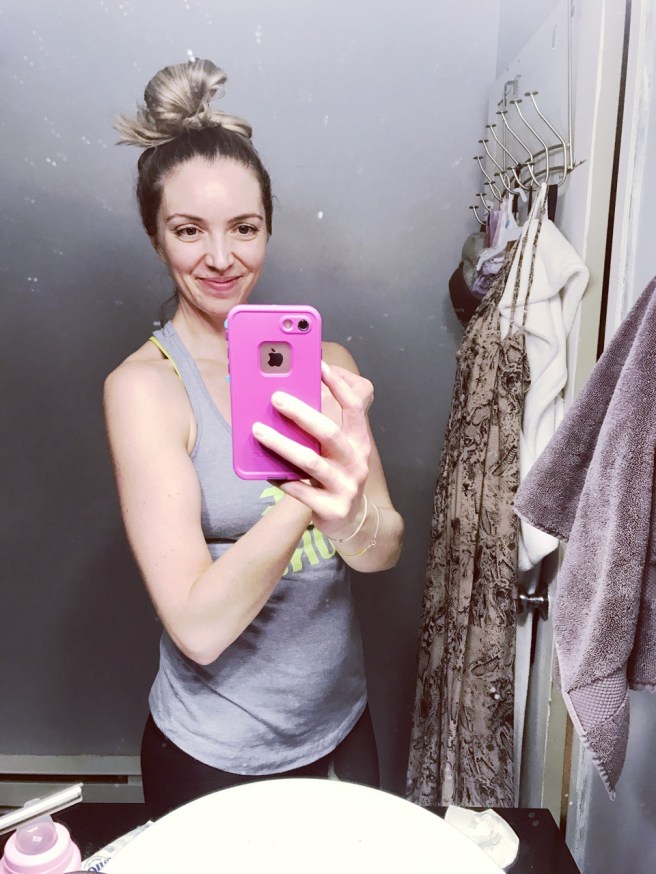
Don’t judge the dirty mirrors, I’m a mom and cleaning mirrors just isn’t one of my priorities right now!

Y’all know I’m not big on posting selfies because working out to me is about taking care of your body, feeling strong, and having the energy to keep up with your people!

In case you are new to my blog, I suffered from severe eating disorders as a teen and tried to be “healthy” in the most unhealthiest of ways. I spent a long time only focused on looks and the number on a scale, and guess where that left me? Broken, empty, and completely unfulfilled. Because when you spend your life focused on not satisfying your hunger, it leaves you unsatisfied in every sense of the word.

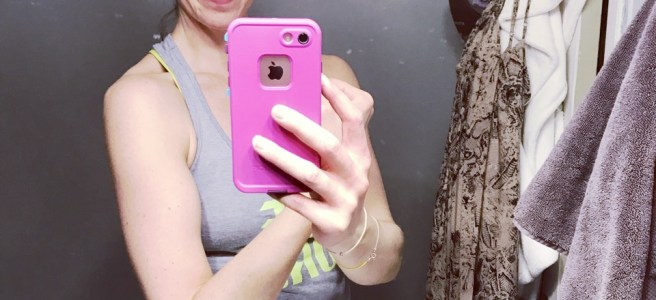
So why am I posting this? Because I can TELL you about why I workout – to feel strong and have the energy to keep up with my kids- but sometimes seeing is believing… and see that little bicep muscle popping up? Well I’ve been working extra hard on it and wanted to address the claims that “you can’t build muscle while breastfeeding,” “it is difficult to lose weight while breastfeeding,” and “you shouldn’t workout while breastfeeding.”
img_9605
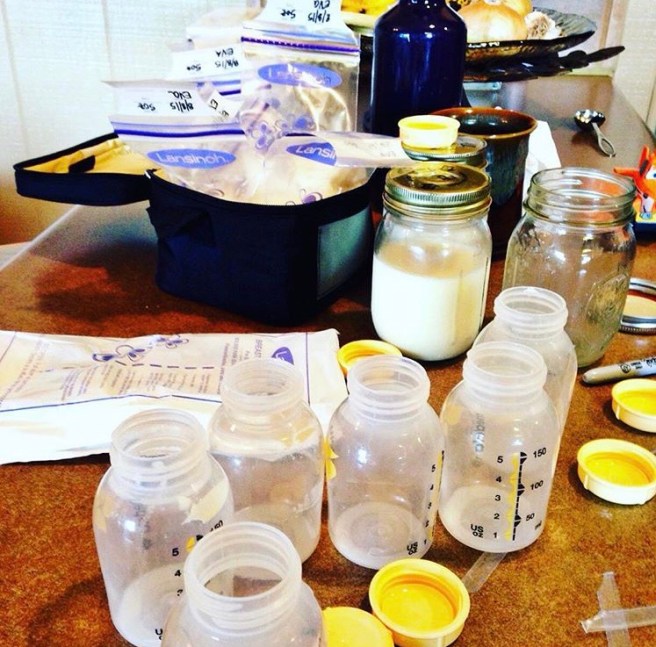
#pumplife …. can you relate???

I have been breastfeeding or pumping for the last 4 years. No joke. During that time I have noticed two things: one, working out has helped me keep my sanity.  On days when I struggle to get anything “done”, moving my body, even for 15 minutes, has made all the difference between tears and smiles (for everyone). And two, yes, it is more difficult to build muscle and lose weight while breastfeeding, but again, you should make every effort to move your body! Why? Because according to the American College of Obstetricians and Gynecologists, being active during pregnancy and while breastfeeding can:

  • Help reduce backaches, constipation, bloating, and swelling
  • Help prevent or treat gestational diabetes (a type of diabetes that starts during pregnancy)
  • Increase energy
  • Improve mood
  • Improve posture
  • Promote muscle tone, strength, and endurance
  • Help you sleep better                                                                                                                        

And my personal favorite, help you feel strong.  So that when the challenges of motherhood arise (which they will sweetheart), you know you can overcome “hard things” and have the mental and emotional strength to push through late nights and early mornings, and so you can better navigate the emotional ups and downs that are a natural part of motherhood. Something extraordinary happens to our bodies, not just physically, when we challenge them in a physical way; there is a point where your heart and your mind are in it and push you to overcome. We need this skill every single day as mothers.  Physical challenges strengthen our tenacity, endurance, and dedication in a way that nothing else can.

So, on to our topic of the day….

Why is it hard to lose weight while breastfeeding?
Short answer… darn hormones. Breastfeeding mothers experience a drop in estrogen & testosterone (both fat burning hormones) and an increase in prolactin (lactating or the “milk making” hormone). Prolactin is linked to fat storage, and because we are perfectly and wonderfully made, prolactin is our bodies’ natural “safeguard” to protect baby’s milk supply, and helps nursing mamas from mobilizing fat stores – so there’s always an energy reserve in case of famine. And let’s not forget lack of sleep, crazy hormones, stress, and exhaustion we all have working against us as new moms – and all factors known to lead to weight gain or at least making it more difficult to lose weight, post baby.

Now let’s talk about gaining muscle while breastfeeding…..
Building muscle while breastfeeding can be just as difficult as losing weight while breastfeeding, and for the same reasons: darn hormones! That same decrease in estrogen and testosterone we talked about earlier also limits your ability and the speed in which you can build muscle (which is why I was so excited when this little baby bicep made an appearance). And because muscle is more “active” tissue, when you have less of it, your body burns calories less effectively. But don’t lose hope! While hormones may not be in your favor as far as weight loss and strength building are concerned, I have several tips and their benefits that hopefully encourage you to keep moving!

First, if you don’t use it, you lose it! Although it may be more difficult to build muscle during pregnancy and while breastfeeding, if you stop working your muscles altogether, you undoubtedly will lose the strength you previously had. If you continue to move and strengthen your body while breastfeeding, you will find it far easier to “lose the baby weight” without having to resort to strict dieting techniques which could put your milk supply in jeopardy.

Which leads me to my next point… My mother always said “nursing women don’t need to diet.” That’s true (in a sense), but that does not mean we should have a field day on junk food, every day. Rather than focus on “restrictive eating” I encourage my clients to focus on filling their bodies with as many “nutrients” as possible daily!

Moms are no stranger to sacrifice and putting their needs behind those of their children and families. And getting nutrients to your breastfed baby is no different. Your baby will get the “first” of your fruits – as in the best of what you eat will go towards making breastmilk, and you, your body will get the “leftovers.” This is why good, quality nutrition is of utmost importance while you are pregnant and breastfeeding. If you are not getting the nourishment you need, yes your milk supply could suffer, but your body could suffer even more. And maybe you won’t feel the repercussions of that immediately but 5, 10, 20 years down the road you will. For example, studies have shown that women often lose 3 to 5 percent of their bone mass during breastfeeding, although they recover it rapidly after weaning. This bone loss may be caused by the growing baby’s increased need for calcium, which is drawn from the mother’s bones. The amount of calcium the mother needs depends on the amount of breast milk produced and how long breastfeeding continues. Women also may lose bone mass during breastfeeding because they’re producing less estrogen, which is the hormone that protects bones. The good news is that, like bone lost during pregnancy, bone lost during breastfeeding is usually recovered within 6 months after breastfeeding ends. And even better news is that just like muscles, bones respond to exercise by becoming stronger. Regular exercise, especially weight-bearing exercise that causes you to work against gravity, helps build and maintain strong bones. Examples of weight-bearing exercise include walking, climbing stairs, dancing, and weight training, or any other exercise using your own body weight as resistance (pilates, barre, and yoga).

So, let’s review shall we? We need nutrients to help support the hundreds of systems and processes vital to keeping us alive. Good nutrition can support a healthy and robust supply of breast milk that, in turn, supports similar life-sustaining systems in our babies we nurse (hey, just keeping another human alive, no big thing).  And then we need nutrients to support all the activity associated with performing our responsibilities as wives, mothers, employees, employers, and still have something leftover between all-night nursing marathons, to rebuild bones, heal our bodies after labor and delivery, and exercise! Whew! So, focus on nutrients, as many as you can get your hands on! And, if you have no idea where to start, that’s where I come in.

Incorporating exercise into your daily routine can be one of the best things you can do for yourself mentally, physically, and emotionally post-baby. But it must be paired with smart nutrition to protect your bones, functioning systems, cells, and your ability to produce breast milk. Like anything worthwhile, this takes effort, a willingness to learn, and dedication. If you are unsure even where to start and the words “nutrition” or “exercise” have you running for the hills, let’s chat. Sign up below for a free 20-minute phone consultation with me where we can discuss your current challenges and how to overcome them! Let’s do this together mamas!
img_9604
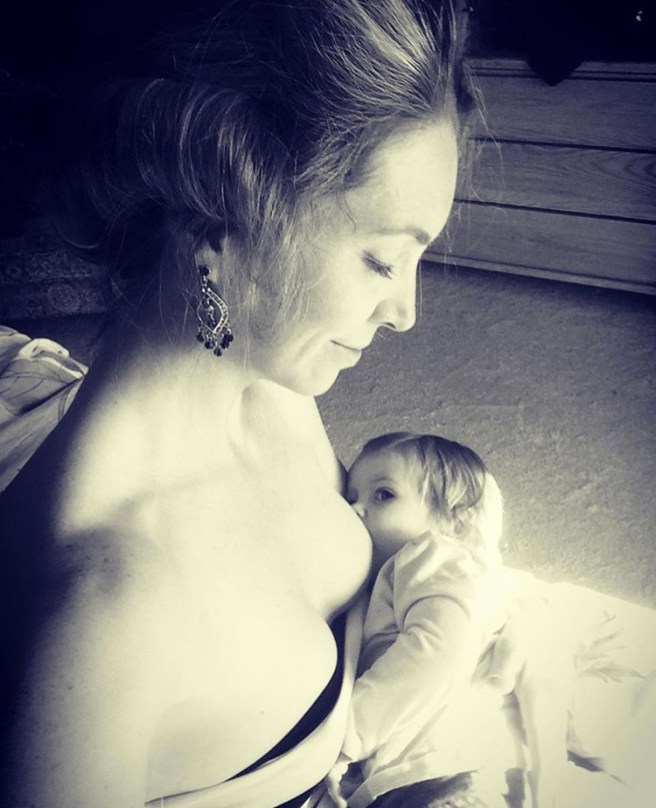
My breast feeding journey has certainly been filled with high highs and low lows but it has forced me to take a very close look at the way I speak to, look at, and the way in which I take care of my body.  It’s no longer “just me.” The choices we make as mothers now directly impact another human(s), so let’s make good ones!

Go back

Your message has been sent

Warning
Warning
Warning

Warning.

How to talk to someone struggling with negative body image…

img_8814
This is a question I get almost weekly from my clients and coaches so I thought I would address it here.  As someone who has struggled with disordered eating and negative body image, I can only tell you what has helped me.  Sorry for my French but I went through hell and back through my addiction to disordered eating and body image, and for A LONG TIME!  Sometimes I wish it didn’t happen to me, but then I realize that if I can help one person or inspire one person to make it out alive, then it was worth it.

Disclaimer: This blog post outlines how I would recommend addressing your concerns with another adult (let’s say someone over 25 or older), this is not how I would recommend addressing these concerns with a young girl or adolescent.  I will also state that I am not a doctor or licensed in any way to treat disordered eating and disordered body image which are legitimate diseases and addictions.  I am sharing with you some sincere ways of trying to change the conversation with a friend, co-worker or loved one who may be struggling with disordered eating/body image. If you feel like someone’s health is in immediate danger, that their behavior is beyond that of negative self-talk and you are concerned for their life and livelihood, please seek professional help.  At the end of this blog post I have also listed some professional resources. 

It’s a slippery slope working with someone who only sees their body for what it isn’t or what it can’t do. Essentially you are working to undo what is likely years of negative self-talk and someone who either was told or led by example (a mother or other strong female role model) or influence (an industry, such as those where aesthetic value is placed on your size and look such as modeling, dancing, gymnastics, figure skating, etc.) that your value comes from what your body looks like; what size you are, and how much you weigh.

First off, this couldn’t be farther from the truth.  Your value comes from the fact that you are a living, breathing human, created in God’s image.  If God didn’t see you as valuable, he wouldn’t have sent his only son to die a brutal criminal’s death to save you:

“Before I formed you in the womb I knew you, before you were born I set you apart.”   – Jeremiah 1:5

“For you created my inmost being; you knit me together in my mother’s womb.” – Psalm 139:13

“Indeed, the very hairs of your head are all numbered.  Don’t be afraid; you are worth more than many sparrows.” – Luke 12:7

“I praise you because I am fearfully and wonderfully made; your works are wonderful, I know that full well.” – Psalm 139:14

If you have a friend who maybe struggles with body image and negative self-talk, here are a few tips that have helped me in my own journey to fight back against these lies of negativity:

Tip No. 1: The power of positivity and encouragement.
In my personal experience, the only thing that can undo years’ worth of loathsome self-talk is to be surrounded by people who view fitness as a way of honoring their body and eating as a way of nourishing their body.  You are not going to change if you don’t change your environment and what influences you.  So, if you have a friend or family member who struggles with negative self-talk, change the conversation to one that’s positive and filled with encouragement!

Tip No. 2: Give them time.
Changing someone’s way of thinking and the way in which they perceive themselves can take a long time…months, maybe even years, and even then, that negative talk can still sneak up (as it often tries to do with me).  If we surround ourselves with people who are only speaking positively about their bodies and what they are capable of, it will start to rub off on us and others.   This is where the magic happens in the monthly virtual bootcamps and team of wellness coaches I lead comes into play:  as coaches, we lead these conversations and therefore can control where it goes and reign it in if it gets off track.  If it takes a turn towards negative town, we re-route it back to the positive.  We use words like NOURISH, FLOURISH, HONOR, STRENGTH, POWER, and focus on how we FEEL, not just how we LOOK.  And we celebrate “non-scale victories” – such as “I did my first full-plank push-up today”, or “I did my first set of 10 burpees ever today”, or “I was able to race around the playground today with my kids and roll around with them in the grass without needing a break.”

Tip No. 3:  Continue to encourage – no matter what! 
No matter what/if you are getting any response or getting anything in return…You just continue to show up, support and stay positive.  And each time your friend’s words or self-talk take a turn towards negative town, you steer them back on track.  Example, friend: “I feel so fat today I can’t even do this.”  You: “Well I am doing this, and I can’t do it without you so get down here and do one more push-up with me.”  Help them feel needed, help them feel valued, help them feel important.  It will remind them that they are all those things, despite the size of their pants or number on the scale.

Oswald Chambers says… “A river reaches places which its source never knows. And Jesus said that, if we have received His fullness, “rivers of living water” will flow out of us, reaching in blessing even “to the end of the earth” (Acts 1:8) regardless of how small the visible effects of our lives may appear to be. We have nothing to do with the outflow— “This is the work of God, that you believe…” (John 6:29). God rarely allows a person to see how great a blessing he is to others.”

Be a river.  Don’t worry what you get out of it in return or if you ever see the fruits of your labor, you just keep flowing positivity and encouragement downstream!

Tip No. 4:  An unhealthy relationship with food is most likely present.
Many people who struggle with body image and negative self-talk usually have an unhealthy relationship with food.  They’ve dabbled in extreme, restriction diets, maybe they’ve struggled with binge eating, but most likely they have a love/hate relationship with food.  So, again, you have an opportunity to change the conversation, you have an opportunity to educate them on all the things food CAN do for them, not “TO” them; as they likely just see food as something that makes them “fat”, not as something that “fuels” them.  Focus on food as fuel, focus on food as medicine, focus on food as nourishing their body and something that enables them to do all the things they want to do.

To review, eating disorders and negative body image are not something that should be taken lightly.  In my personal experience, it took the grace of God, a little tough love, a whole lot of support and encouragement, and being around other positive people to help me start to change the conversation in my head, and my heart, from self-hatred to self-care.  Notice I did not say self-love.  For me, personally, the word “care” just had/has more powerful meaning.  When you “care” about something, you are saying you are committing to it for the long term…. I am going to “care” for you insinuates “I am going to be here for the long haul.”  Care is defined as “the provision of what is necessary for the health, welfare, maintenance, and protection of someone or something.”  Love is defined as “an intense feeling of deep connection.”  There are days where my “love” for my body is less intense than other days, but caring for my body requires daily commitment, choices, and actions.  And I think that’s the difference and why that word is so powerful, love is a feeling, and feelings can easily be swayed by many internal or external factors.  Care requires action.  And sometimes the best thing we can do for those struggling with eating disorders and negative body image, is to provide them with small, little action steps they can do daily to take care of their body.  With support and encouragement from friends and family, it is possible to change the conversation and turn what one feels about oneself from hate to love and turn neglect into positive action.

If you are looking for additional resources on this topic, I would recommend the following:

https://www.eatingdisorderhope.com/

https://www.eatingdisorderhope.com/treatment-centers

http://www.center4ed.org/resources.asp

http://www.nationaleatingdisorders.org/

http://www.nationaleatingdisorders.org/find-help-support

If you have additional questions about eating disorders or negative body image and my personal experience, please comment below or email me at jenthornfit@gmail.com.

And if you want to join our team of amazing wellness coaches who support, care, encourage and uplift others, we are currently hiring and would love to welcome you to our positive Team Refine community!  Inquiries can be sent to: jenthornfit@gmail.com