The Beauty of Bacon…

img_9656
Bacon in the morning, bacon in the evening, bacon at supertime!!!

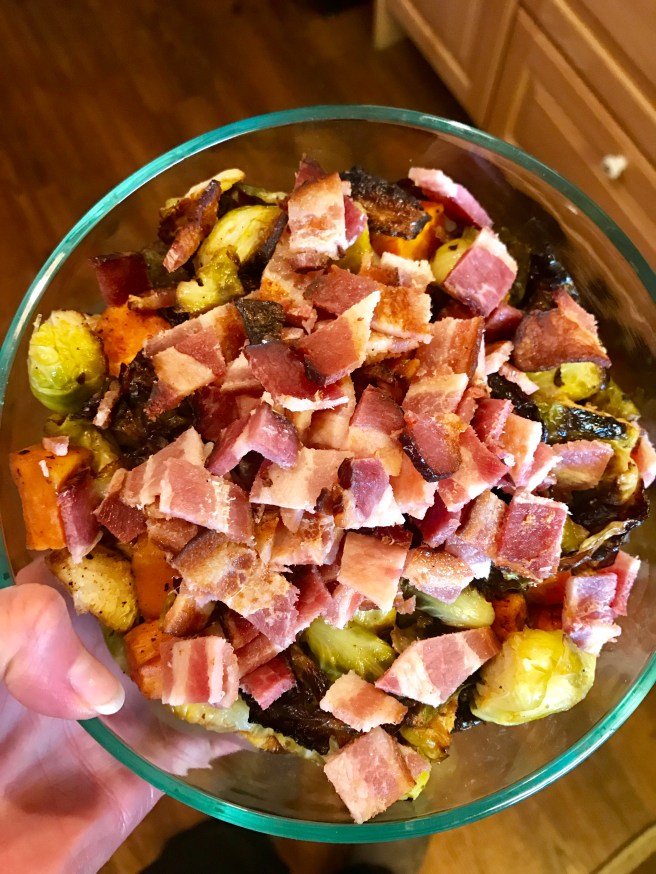
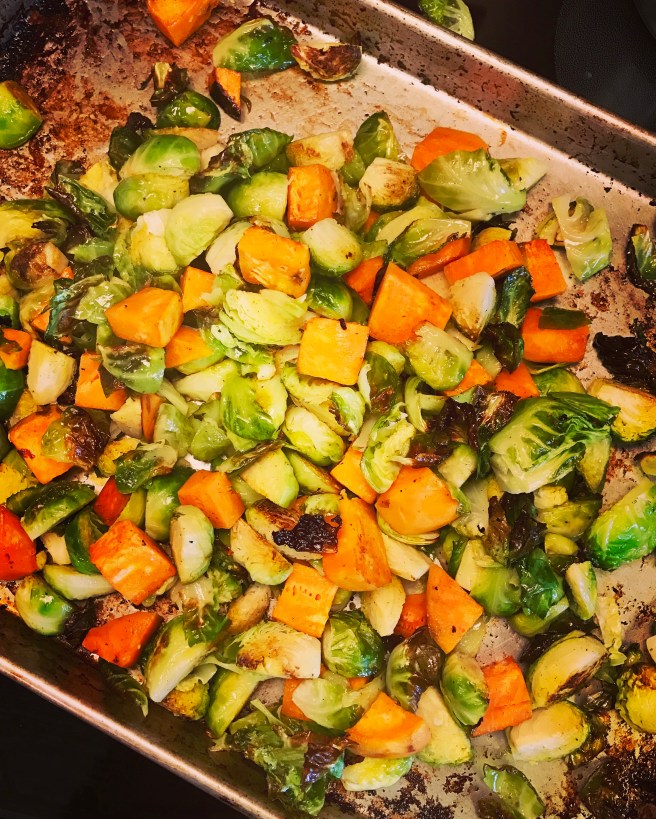
Food prep was going down today… one of my absolute favorites: Brussels sprouts and sweet potatoes roasted in bacon fat! Yep! I said BACON!!!
If there’s one health tip I could give all women out there, it would be to eat more fat, specifically the following:

  • Saturated Fats:  like those found in red meat, cream, butter, ghee, lard, tallow, eggs, coconut oil or palm oil (use organic from sustainable agriculture).
  • Medium-chain triglycerides (MCTs): which are saturated fats our body can digest very easily. MCTs, which are mostly found in coconut oil, behave differently when ingested and are passed directly to the liver to be used as an immediate form of energy. They are also present in butter and palm oil in smaller quantities. MCTs are used by athletes to improve and enhance performance and are great for fat loss.
  • Monounsaturated Fats: also known as “MUFA”, omega 9, and oleic acid are found in avocados, olives, beef and nuts (especially macadamias) and have been known to prevent heart disease.  Oils high in MUFA such as extra virgin olive oil, avocado oil and macadamia nut oil are best for cold use (MUFA are less stable than SFA), for finishing meals or after cooking.


Why? Because life is a marathon not a sprint and we need long-term, sustainable energy to help us endure! So many of my clients still think it’s all about calories in calories out, but not all calories are created equal; the body metabolizes calories from carbohydrates differently than fats. When you eat a diet high in carbohydrates but low in fat, your body gets it’s energy from sugar. This is called a glycolysis state, where blood glucose (sugar) provides most of the energy. This is in contrast to ketosis, a metabolic state in which most of the body’s energy comes from ketone bodies in the blood. Many of you may have seen or heard of the “Ketogenic Diet” or “Keto Diet” which believes that 5-10% calories should come from carbs (net carbs), 15-30% of calories should come from protein, and 65-75% of your calories should come from fat in order to benefit from ketone bodies produced by your liver.

ketones

What are “ketones”?
Ketones are a beneficial product of fat metabolism in the body. When carbohydrate intake is restricted, it lowers blood sugar and insulin levels. As insulin levels fall and energy is needed, fatty acids flow from the fat cells into the bloodstream and are taken up by various cells and metabolized in a process called beta-oxidation.

The end result of beta-oxidation is a molecule called acetyl-coA, and as more fatty acids are released and metabolized, acetyl-coA levels in the cells rise.  This causes a sort of metabolic “feedback loop” which triggers liver cells to shunt excess acetyl-Coa into ketogenesis, or the making of ketone bodies.

Once created, the liver dumps the ketone bodies into the blood stream and they are taken up by skeletal and heart muscle cells at rates of availability.  In addition, the brain begins to use ketones as an alternate fuel when blood levels are high enough to cross the blood brain barrier.

So, what is the ideal fat intake on the ketogenic diet?
The amount of fat varies for all individuals and depends on your goal. In general, you won’t need to precisely count fat intake or calories on a ketogenic diet, because eating food naturally low in carbs will keep you sated for longer.

When you eat this way, your body is burning fat for energy rather than carbohydrates. So your body actually burns either its own body fat or fat that you’re consuming through your diet for its overall energy production. So, less carbs, moderate protein, and high fat is something we have started implementing in our home!
IMG_9653.JPG
We have also started incorporating a lot more cruciferous vegetables because I recently learned that as a breastfeeding mama I am at risk for adrenal fatigue – a condition where your body and adrenal glands can’t keep up with the tremendous amount of daily stress placed on them. Cruciferous vegetables (such as broccoli, cauliflower, and Brussels sprouts) are rich in nutrients, easy to digest, have healing properties, and help replenish your adrenal energy so your system can come back to full health!

So here’s to bacon, Brussels sprouts, and your health! What do you guys think? Have you tried eating this way??? Notice a difference? I would love to hear about your experience!
Breastfeeding, Weight Loss, Muscle Building, and Hormones… Oh My!

img_9189
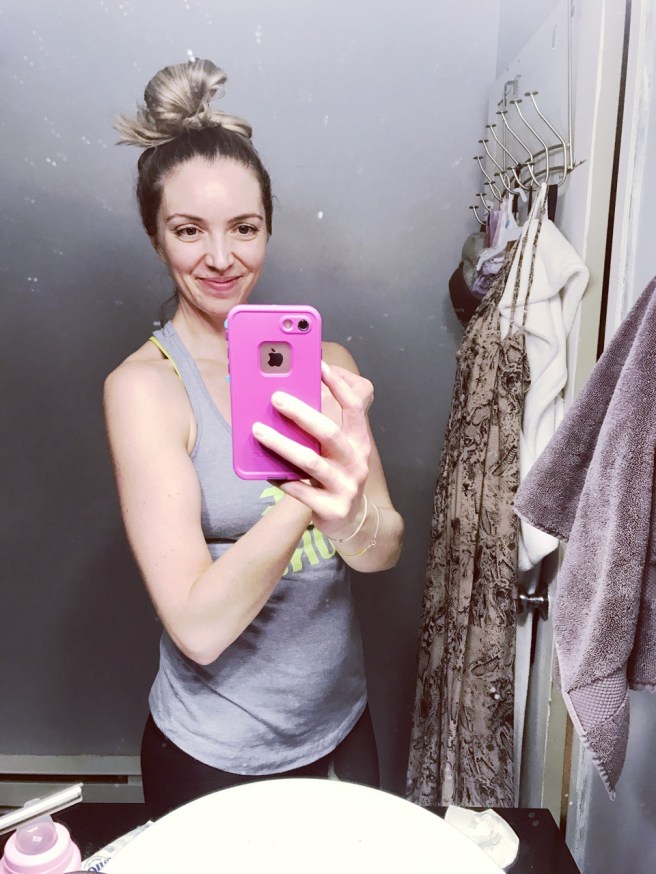
Don’t judge the dirty mirrors, I’m a mom and cleaning mirrors just isn’t one of my priorities right now!

Y’all know I’m not big on posting selfies because working out to me is about taking care of your body, feeling strong, and having the energy to keep up with your people!

In case you are new to my blog, I suffered from severe eating disorders as a teen and tried to be “healthy” in the most unhealthiest of ways. I spent a long time only focused on looks and the number on a scale, and guess where that left me? Broken, empty, and completely unfulfilled. Because when you spend your life focused on not satisfying your hunger, it leaves you unsatisfied in every sense of the word.

So why am I posting this? Because I can TELL you about why I workout – to feel strong and have the energy to keep up with my kids- but sometimes seeing is believing… and see that little bicep muscle popping up? Well I’ve been working extra hard on it and wanted to address the claims that “you can’t build muscle while breastfeeding,” “it is difficult to lose weight while breastfeeding,” and “you shouldn’t workout while breastfeeding.”

img_9605
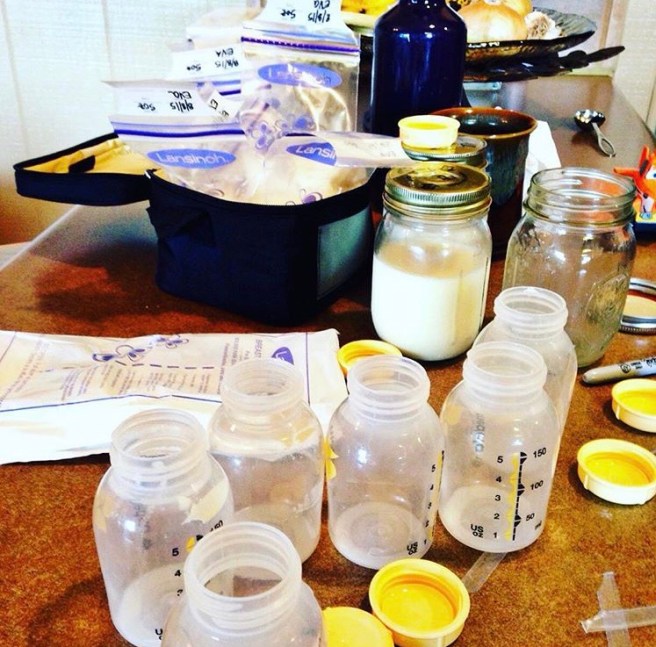
#pumplife …. can you relate???

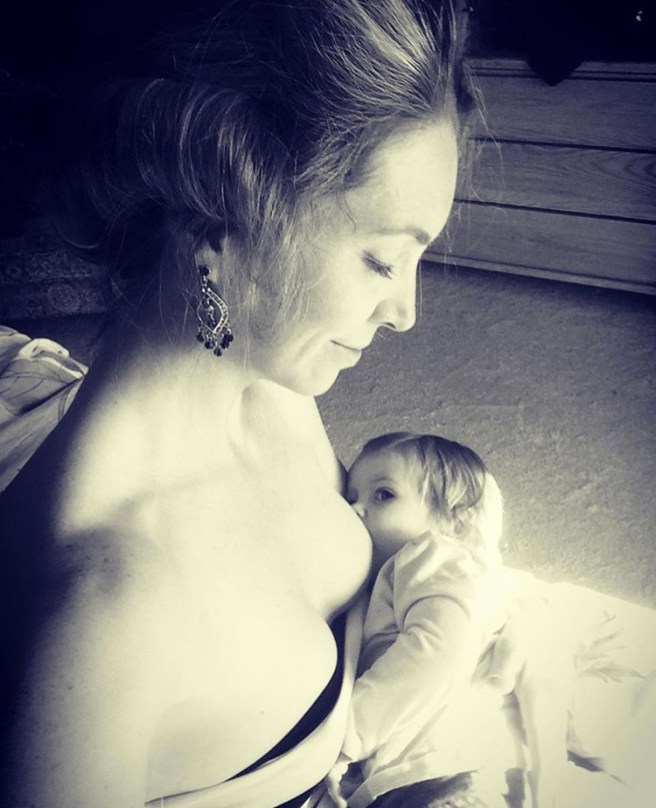
I have been breastfeeding or pumping for the last 4 years. No joke. During that time I have noticed two things: one, working out has helped me keep my sanity.  On days when I struggle to get anything “done”, moving my body, even for 15 minutes, has made all the difference between tears and smiles (for everyone). And two, yes, it is more difficult to build muscle and lose weight while breastfeeding, but again, you should make every effort to move your body! Why? Because according to the American College of Obstetricians and Gynecologists, being active during pregnancy and while breastfeeding can:

  • Help reduce backaches, constipation, bloating, and swelling
  • Help prevent or treat gestational diabetes (a type of diabetes that starts during pregnancy)
  • Increase energy
  • Improve mood
  • Improve posture
  • Promote muscle tone, strength, and endurance
  • Help you sleep better                                                                                                                        

And my personal favorite, help you feel strong.  So that when the challenges of motherhood arise (which they will sweetheart), you know you can overcome “hard things” and have the mental and emotional strength to push through late nights and early mornings, and so you can better navigate the emotional ups and downs that are a natural part of motherhood. Something extraordinary happens to our bodies, not just physically, when we challenge them in a physical way; there is a point where your heart and your mind are in it and push you to overcome. We need this skill every single day as mothers.  Physical challenges strengthen our tenacity, endurance, and dedication in a way that nothing else can.

So, on to our topic of the day….

Why is it hard to lose weight while breastfeeding?
Short answer… darn hormones. Breastfeeding mothers experience a drop in estrogen & testosterone (both fat burning hormones) and an increase in prolactin (lactating or the “milk making” hormone). Prolactin is linked to fat storage, and because we are perfectly and wonderfully made, prolactin is our bodies’ natural “safeguard” to protect baby’s milk supply, and helps nursing mamas from mobilizing fat stores – so there’s always an energy reserve in case of famine. And let’s not forget lack of sleep, crazy hormones, stress, and exhaustion we all have working against us as new moms – and all factors known to lead to weight gain or at least making it more difficult to lose weight, post baby.

Now let’s talk about gaining muscle while breastfeeding…..
Building muscle while breastfeeding can be just as difficult as losing weight while breastfeeding, and for the same reasons: darn hormones! That same decrease in estrogen and testosterone we talked about earlier also limits your ability and the speed in which you can build muscle (which is why I was so excited when this little baby bicep made an appearance). And because muscle is more “active” tissue, when you have less of it, your body burns calories less effectively. But don’t lose hope! While hormones may not be in your favor as far as weight loss and strength building are concerned, I have several tips and their benefits that hopefully encourage you to keep moving!

First, if you don’t use it, you lose it! Although it may be more difficult to build muscle during pregnancy and while breastfeeding, if you stop working your muscles altogether, you undoubtedly will lose the strength you previously had. If you continue to move and strengthen your body while breastfeeding, you will find it far easier to “lose the baby weight” without having to resort to strict dieting techniques which could put your milk supply in jeopardy.

Which leads me to my next point… My mother always said “nursing women don’t need to diet.” That’s true (in a sense), but that does not mean we should have a field day on junk food, every day. Rather than focus on “restrictive eating” I encourage my clients to focus on filling their bodies with as many “nutrients” as possible daily!

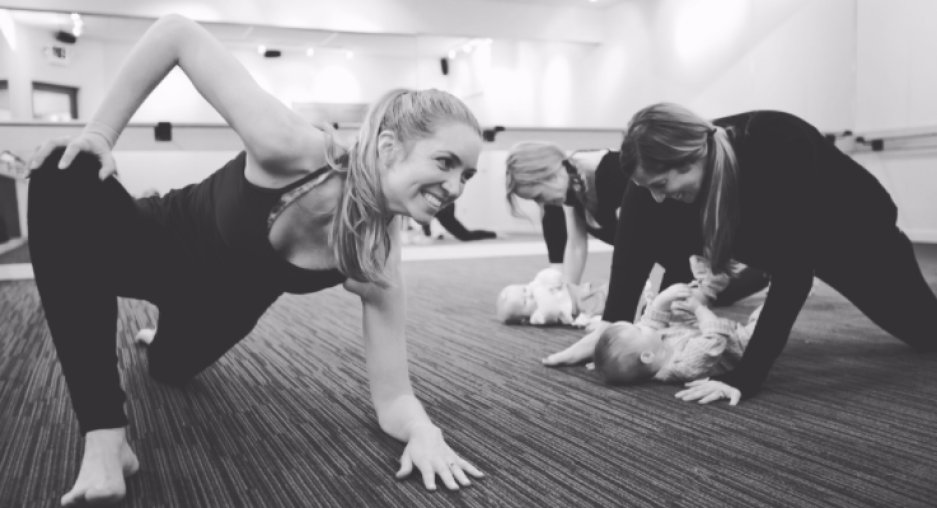
Moms are no stranger to sacrifice and putting their needs behind those of their children and families. And getting nutrients to your breastfed baby is no different. Your baby will get the “first” of your fruits – as in the best of what you eat will go towards making breastmilk, and you, your body will get the “leftovers.” This is why good, quality nutrition is of utmost importance while you are pregnant and breastfeeding. If you are not getting the nourishment you need, yes your milk supply could suffer, but your body could suffer even more. And maybe you won’t feel the repercussions of that immediately but 5, 10, 20 years down the road you will. For example, studies have shown that women often lose 3 to 5 percent of their bone mass during breastfeeding, although they recover it rapidly after weaning. This bone loss may be caused by the growing baby’s increased need for calcium, which is drawn from the mother’s bones. The amount of calcium the mother needs depends on the amount of breast milk produced and how long breastfeeding continues. Women also may lose bone mass during breastfeeding because they’re producing less estrogen, which is the hormone that protects bones. The good news is that, like bone lost during pregnancy, bone lost during breastfeeding is usually recovered within 6 months after breastfeeding ends. And even better news is that just like muscles, bones respond to exercise by becoming stronger. Regular exercise, especially weight-bearing exercise that causes you to work against gravity, helps build and maintain strong bones. Examples of weight-bearing exercise include walking, climbing stairs, dancing, and weight training, or any other exercise using your own body weight as resistance (pilates, barre, and yoga).

So, let’s review shall we? We need nutrients to help support the hundreds of systems and processes vital to keeping us alive. Good nutrition can support a healthy and robust supply of breast milk that, in turn, supports similar life-sustaining systems in our babies we nurse (hey, just keeping another human alive, no big thing).  And then we need nutrients to support all the activity associated with performing our responsibilities as wives, mothers, employees, employers, and still have something leftover between all-night nursing marathons, to rebuild bones, heal our bodies after labor and delivery, and exercise! Whew! So, focus on nutrients, as many as you can get your hands on! And, if you have no idea where to start, that’s where I come in.

Incorporating exercise into your daily routine can be one of the best things you can do for yourself mentally, physically, and emotionally post-baby. But it must be paired with smart nutrition to protect your bones, functioning systems, cells, and your ability to produce breast milk. Like anything worthwhile, this takes effort, a willingness to learn, and dedication. If you are unsure even where to start and the words “nutrition” or “exercise” have you running for the hills, let’s chat. Sign up below for a free 20-minute phone consultation with me where we can discuss your current challenges and how to overcome them! Let’s do this together mamas!

img_9604
My breast feeding journey has certainly been filled with high highs and low lows but it has forced me to take a very close look at the way I speak to, look at, and the way in which I take care of my body.  It’s no longer “just me.” The choices we make as mothers now directly impact another human(s), so let’s make good ones!

Go back

Your message has been sent

Warning
Warning
Warning

Warning.

Happy Valentines Day…

img_9528

Happy Valentine’s Day to my forever Valentine! Someone asked me the other day about dating and relationships. It was funny because I do not consider myself a “pro” in this area but a constant “work in progress.” Levi and I work hard on our relationship every day and it is not always a “walk in the park” – so don’t let this picture fool you. I am on my knees praying for him and our relationship daily, and many of those prayers are about asking for humility and God’s grace and forgiveness for my humanness, imperfectness, and selfishness. Levi is about as easygoing as they come and I’m like a fiery, passionate, crazed wild stallion; unpredictable with a tendency to be a slave to my emotions. So when I was asked about relationships the other day, I had to think about it for a minute, and here’s what I came up with…
.
.
1. To all my single ladies out there, run fearlessly after Christ and whoever is keeping up with you, consider them a potential partner in life. And, as far as “dating”, remember, until you are married, that gentleman you are seeing is potentially someone else’s husband.  So tread carefully, respect each other, and don’t drag out pain and heartache.  Seek God first, He knows what you need!
.
.
2. Be partners in life: you should complement each other. It’s great to have things in common but also see the value they bring to the table and skills that you maybe don’t have. I am not a handy(wo)man, cannot do anything with a hammer, do not have patience with “projects” and home improvement, and plants come to me to die… so thank God for Levi who thrives in all those areas.
.
.
3. Have a state of the Union: every 3 months, discuss the state of your “union”; things that are going well, things that are not going well, areas you both can improve upon. And don’t be afraid to hurt each other’s feelings; when you really love someone you are not afraid to tell them things that will make them or your relationship better. Reminder, speak from a place of love on this, not anger. And if you are on the receiving end, be open to a little positive criticism that could make you better.
.
.
4. Married ladies: keep it HOT! As my 60+ year old, conservative, Jesus loving mother said at my wedding shower (in front of my entire bridal party, aunts, cousins, and future in-laws), “have a lot of sex.” But for reals, intimacy between married couples is sacred and healthy!
.
.
Finally, put the needs of one another first and lift them up in prayer daily! Relationships do take work so if you are dating, maybe ask yourself, do I want to fight with and fight for this person for the rest of my life??? I can’t imagine doing any of this life, the good, the bad, or the ugly without my Levi! He makes me better!